Episode 12: Amazonas
When we talk about searching for cacao, we don’t think about the fine details in between that make each journey unique. I’ll paint a picture. We load up into Matias’s pickup, all crammed in, luggage tied, ready for our seven-plus hour journey to Bagua. The hours are filled with almost a calculated routine of: dose off for 20 mins, wake up to breathtaking mountain ranges, mumble questions in spanish over the epic playlists of 80s Peruvian rock.

At nightfall we ride the curvy roads through the “bosque seco” where it hadn’t rained in over four years, then whisking over abrupt mixes of asphalt, fallen rocks, dirt, and deep dips all the way up to 2100m, and then of course back down towards the selva.
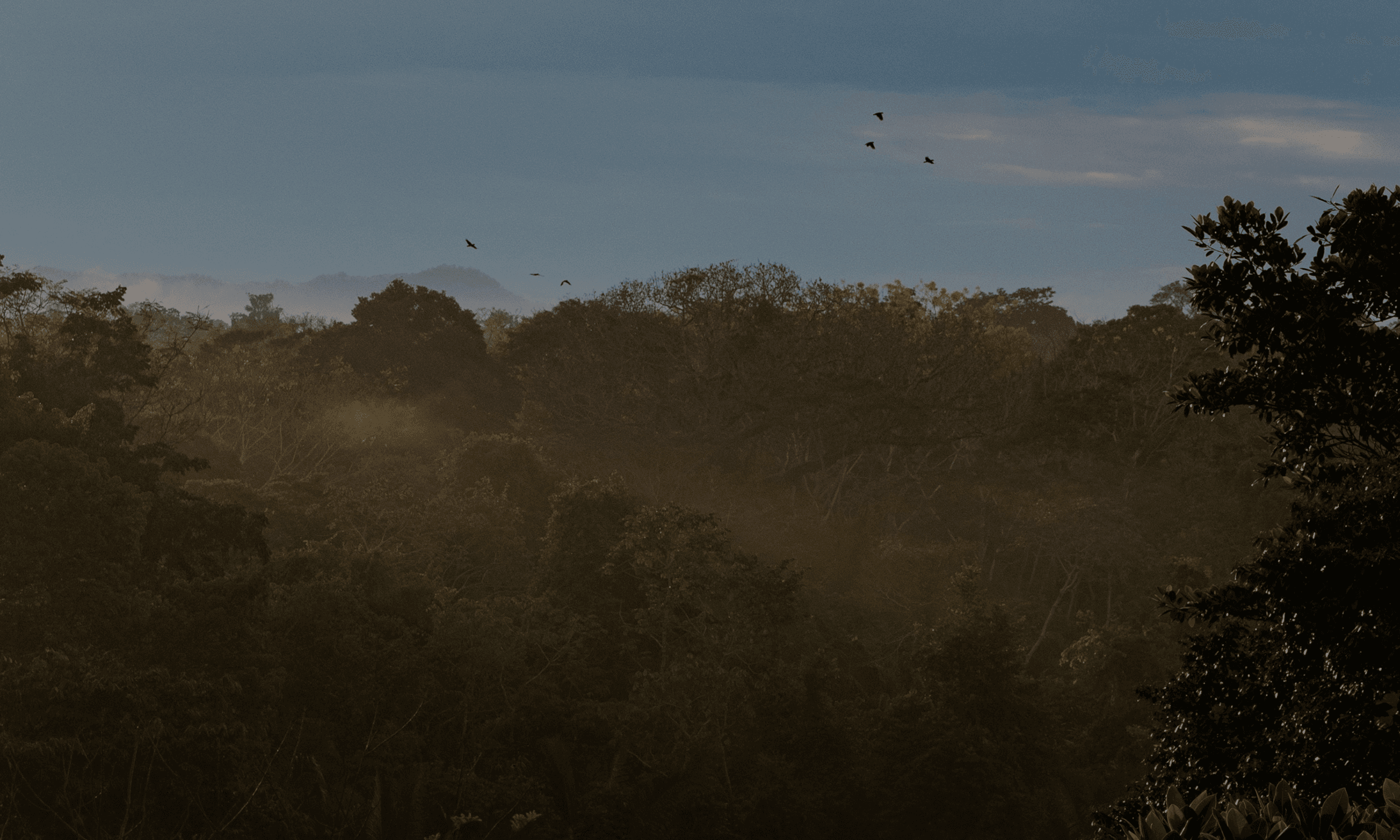
La selva. A word I absolutely adore. Selvatico, salvaje, wild. Respected. Regarded. Regal in her splendor and power. Driving through as much as walking through is a sensation so humbling, like feeling completely protected yet at the complete disposition of any unpredictable event at any given moment.
Where the Road Turns Wild
At nightfall we ride the curvy roads through the “bosque seco” where it hadn’t rained in over four years, then whisking over abrupt mixes of asphalt, fallen rocks, dirt, and deep dips all the way up to 2100m, and then of course back down towards the selva.
La selva. A word I absolutely adore. Selvatico, salvaje, wild. Respected. Regarded. Regal in her splendor and power. Driving through as much as walking through is a sensation so humbling, like feeling completely protected yet at the complete disposition of any unpredictable event at any given moment.

On our way to the farm, we’re stopped along the crest of the waters that devastated this village not 5 years ago. For how much Mother Nature continues to reclaim, us humans continue to take away. Each turn we take reveals more and more deforestation. Once lush forests are now seemingly endless fields that have been groomed for farming rice—a crop that does not allow for the rich, intricate, biodiversity that cacao farming encourages.
We meet with Fernando Leon, the President of the Cooperativa Central de Productores Agrarias de Amazonas (CEPROAA), a local organization that is nationally renowned for its cacao and coffee. The goals of CEPROAA are very aligned with the mission of the HCP.
They use their resources to help farmers around the Las Amazonas region with the technical training necessary to preserve their ancestral cacaos.

They are currently awaiting the approval of the official seal of origin for Las Amazonas, similar to the DOP (Denominazione di Origine Protetta) mark Italy uses for food products. Leon emphasizes that having one (or more) of their 348 farmers designated Heirloom would be a sizable goal for the cooperative. Having the possibility to apply the prestigious Heirloom Cacao mark in addition to the already distinguished seal of Las Amazonas would allow CEPROAA to expand the market of their ancestral cacaos globally and for them to further support the farmers with proper equipment and technical assistance.
I hold my breath as we drive over a tiny cement slab into a dense forest that abruptly appears at the edge of the seemingly infinite stretch of rice fields. We tip into the muddy “cacao island” as Mey calls them.
“The good thing is that, in Amazonas, in these areas of cacao that [the farmers] preserve they’re also preserving the area itself. Because we see a lot of rice farms. I mean, there’s so much deforestation of the forests to plant rice that now there are these sort of cacao “islands” in the middle of all of these rice fields.”
Leon introduces us to Don Alfonso who has been farming this cacao for over sixty years.
The farm once belonged to his grandparents, who had originally gotten the seeds from Brazil well over a century ago. The trunks of these cacao trees are dark with thick knobs bulging out from the base, which is decorated with healthy, bright green pods all the way to the tops of the branches that look like they could be made of iron for how strong they are.

While the team is taking measurements, cracking open pods, and registering BRIX, Don Alfonso starts to open up about how where we now see rice was once entirely dense forest absolutely filled with cacao just like his. Cacao has been Don Alfonso’s entire life. He makes his own chocolate, too, to share with his family and to drink himself. One of his sons has a farm of his own, and will manage his dad’s farm when the time comes.
As he’s telling us the story of his family farm he giggles and says, “I’m seventy years old! I’ll die with this cacao.” Maybe it sounds better in Spanish!


From the two hectare cacao island, Leon takes us to the farm of one of the seventy eight women that belong to CEPROAA. Irene is an engineer taking care of her family’s farm that none of her siblings wanted to take on after the passing of their parents. Her cacao island spans over four hectares and, similar to Don Alfonso’s farm, is also surrounded by rice fields—some of which belongs to her. The cacao farm was nearly completely abandoned when she took it on. To earn money, she started cultivating rice, bananas, and eventually took notice to the particular, special-looking cacao on her farm. With the support of CEPROAA, the farm is flourishing with ancestral cacaos. Mey and Don Leon record data of the trees they had previously marked, and walk Irene through the process of preparing the samples.
We visit CEPROAA to do the same. All of the staff at the cooperative gather around the fermentation boxes for a live demonstration and explanation by Don Leon, while Mey inspects the drying facilities and cacao processing equipment.
I agree with Mey when she says that it finally feels like we're all on the same page. We're working towards a common goal: preserve cacao, support farmers, save the planet, and make really good chocolate.
Next stop for us, and last stop for me for now: the native community of Tornillo.